Across Sub-Saharan Africa, countries continue to make important commitments toward improving maternal, newborn, and child health outcomes. Yet sustaining progress will increasingly depend on stronger domestic financing, coordinated advocacy, and resilient health systems that can respond to the needs of women and children across all levels of care.
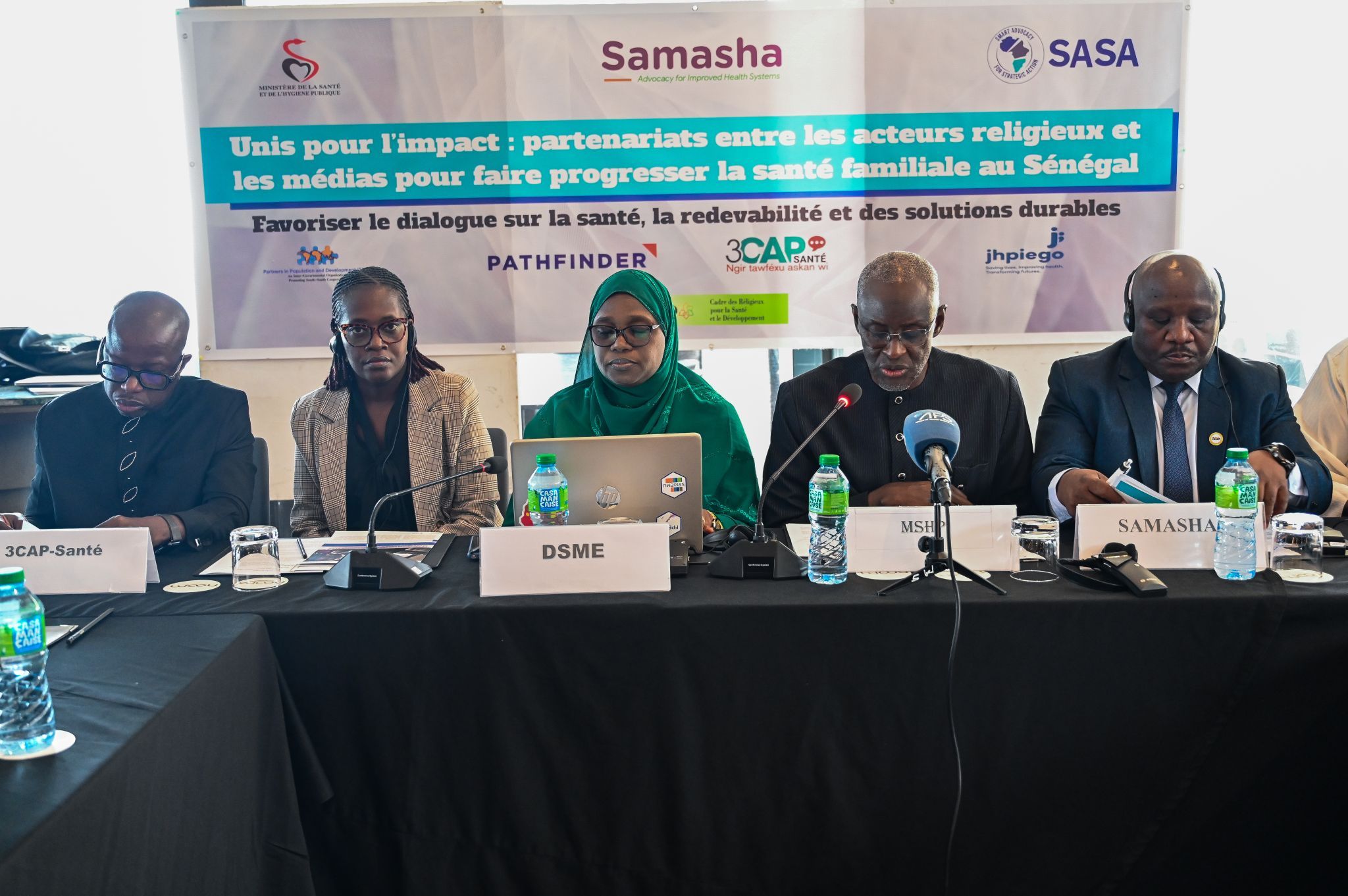
From 11th to 15th May 2026, government leaders, civil society organizations, media stakeholders, and development partners convened in Dakar, Senegal, for a National Stakeholder Mobilization Engagement organized through the partnership between the Samasha and SASA Alliance. Held in collaboration with the Ministry of Health and Social Action, and 3CAP-Santé Sénégal, the engagement created space for strategic dialogue on strengthening advocacy, resource mobilization, and accountability for maternal and newborn health priorities in Senegal.
The engagement forms part of broader efforts to support Senegal’s health transformation agenda under Vision Sénégal 2050, which prioritizes improving equity, strengthening health systems, and reducing maternal and child mortality.
Speaking during the engagement, Cheikh Tidiane Gueye, Technical Advisor to the Minister of Health and Social Action, highlighted the country’s significant progress over the last decade, noting that maternal mortality has reduced from approximately 510 deaths per 100,000 live births to nearly 150 deaths per 100,000 live births.
“We have all to come together and mobilize resources that will contribute to financing the health system and allow communities to access care regardless of the distance separating them from health facilities.”
While acknowledging progress, stakeholders emphasized that important gaps remain in ensuring equitable access to quality maternal and newborn health services, particularly for vulnerable and underserved populations.
Throughout the engagement, discussions focused on increasing domestic investments in maternal and newborn health, strengthening coordination among stakeholders, and ensuring advocacy efforts are closely aligned with national priorities and existing health systems. The sessions also explored how stronger partnerships, strategic communication, and locally driven accountability mechanisms can help sustain progress amid evolving financing realities across the region.
The engagement further reinforced the importance of positioning advocacy not as a standalone activity, but as a critical driver for stronger health systems, improved service delivery, and increased national ownership of maternal and newborn health priorities.
For Samasha, the Dakar engagement reflects a continued commitment to supporting country-led accountability, strengthening health systems, and amplifying advocacy efforts
that translate commitments into measurable action for women, children, and communities across Africa. As countries continue navigating growing pressure on health systems and financing constraints, sustained collaboration between governments, civil society, media, and technical partners will remain essential in accelerating progress for maternal and newborn health across the continent.