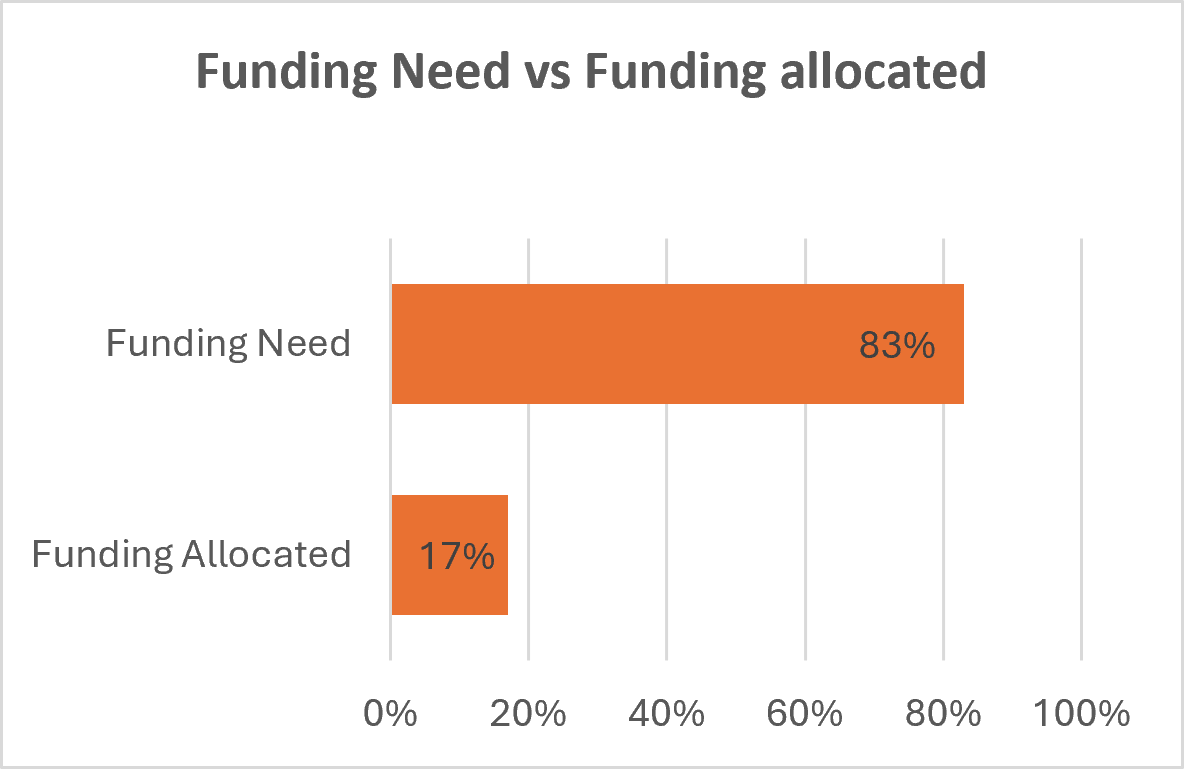
Releasing funds is essential, but financing alone does not guarantee commodity security—especially in a country with one of Africa’s largest populations.
With an estimated population of more than 240 million people, including approximately 54 million women of reproductive age (United Nations, World Population Prospects 2024), Nigeria has one of Africa's largest needs for contraceptive supplies. Yet an estimated one in five married women still has an unmet need for family planning (Nigeria Demographic and Health Survey (NDHS) 2023–24), underscoring the importance of sustained domestic financing to ensure contraceptives are consistently available where they are needed most.
To better understand where the remaining gaps existed, Africa Health Budget Network (AHBN), with support from Samasha and partners, used the Motion Tracker Approach to generate evidence on financing gaps. By tracking approved budget allocations against actual releases and documenting funding shortfalls, the initiative provided the analysis needed to engage policymakers and strengthen public advocacy.
These coordinated efforts contributed to the Federal Government releasing US$3.75m, representing 94% of its approved 2025 family planning commodity budget—in February 2026. The release demonstrated that accountability data could influence government action. Yet it also reinforced an important lesson: releasing funds is not the same as fully financing family planning. In a country with approximately 54 million women of reproductive age, investments must keep pace with demand.
As stock-outs continue to affect 24 of Nigeria's 36 states, advocates have an important role to play in generating evidence that supports increased domestic financing, ensuring budget commitments are not only released but are sufficient to meet the country's family planning needs.
“Releasing funds is progress. Investing enough to meet the need is impact.”
If Kenya's lesson is that commitments must be honoured, and Nigeria's lesson is that investments must match need, then Uganda's lesson is that commodities must reach the last mile