Kenya showed that family planning financing must be released. Nigeria demonstrated that financing must also be sufficient to meet the growing demand for services. Uganda highlights the final link in the chain: ensuring commodities reach the health facilities where they are needed most.
An empty shelf does not always mean there are no family planning commodities. Sometimes, commodities are available elsewhere, but weak information sharing, poor stock visibility and limited coordination leave one facility overstocked while another experiences an artificial stock-out.
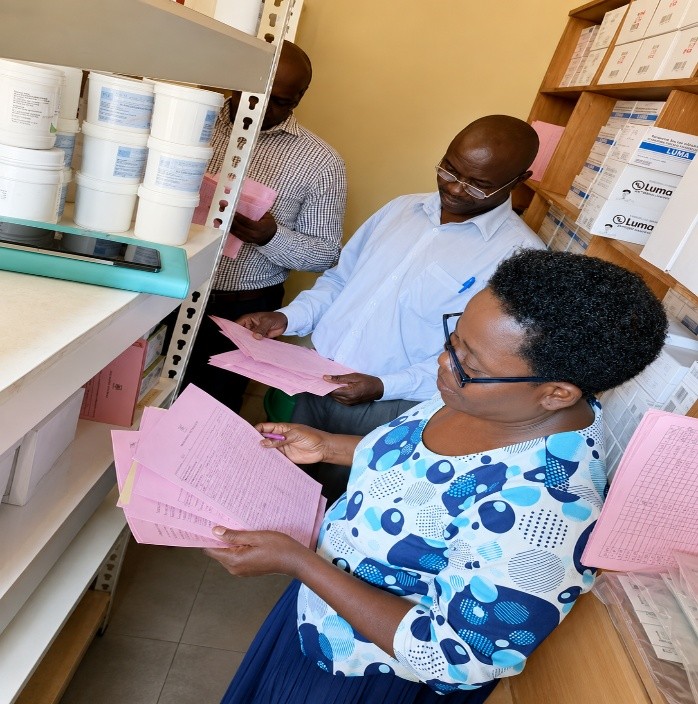
Between March and May 2026, Samasha, with support from Enabel, worked with District Health Teams across Kamuli, Jinja City, Jinja District, Kasese, Kabarole, Kyegegwa and Fort Portal City to strengthen medicines accountability, improve stock visibility and promote data-driven decision-making.
Through mentorship, supportive supervision and routine review of stock records, district teams were better able to identify facilities with shortages and those with excess commodities, enabling timely redistribution before stock-outs occurred.
The intervention showed that preventing stock-outs is not always about purchasing more essential commodities. Sometimes, it is about making better use of the commodities already available by strengthening information sharing and coordination at the subnational level.
Only when financing is released, investments match demand, and commodities reach the last mile does an empty shelf become a stocked one, ensuring every woman can access the family planning method of her choice.
"An empty shelf is not always a shortage of commodities—it can be a shortage of information."