From 22–29 September 2026, world leaders, governments, civil society and development partners gathered in New York for the High-Level Week of the 81st United Nations General Assembly (UNGA81).
Held under the theme “Restoring Trust, Managing Transformation: A United Nations That Delivers for All,” the week brought renewed attention to how countries can sustain progress on health at a time of tightening global resources.
For Samasha, one message from the discussions on women’s, children’s and adolescents’ health was particularly relevant: commitments must be backed by financing, implementation and accountability if they are to translate into better health outcomes.
Moving beyond commitments
At the PMNCH Annual Accountability Breakfast held alongside UNGA81 on 21 September, discussions centred on “From Pledges to Progress: Accountability for Financing to Improve Women's, Children's and Adolescents' Health and Well-being.”
The discussion moved beyond simply asking what governments have promised. Instead, participants examined whether commitments are reflected in budgets, whether resources reach communities, and how civil society, parliamentarians, young people and communities can strengthen accountability for financing decisions.
This is increasingly important as resources become more constrained.
Speaking at another UNGA81 event on financing women's, children's and adolescents' health, WHO Director-General Dr Tedros Adhanom Ghebreyesus noted that while maternal and child survival has improved substantially over the past 25 years, approximately 260,000 women still die every year from pregnancy- and childbirth-related causes, while 4.9 million children die before reaching their fifth birthday.
His message was straightforward: health commitments need budgets behind them.
Financing reproductive health commodities
UNGA81 also brought renewed attention to one of the most practical elements of women's health: ensuring that essential commodities are available when and where they are needed.
On 23 September, governments and partners announced more than US$715 million in commitments for reproductive health, supporting infrastructure, services and supplies including contraceptives and maternal-health medicines. Of this, Burundi, Madagascar, Mozambique and Zimbabwe committed more than US$292 million in domestic resources.
The commitments reflect a broader shift towards sustainable, nationally owned financing.
Globally, an estimated 259 million women who want to avoid or delay pregnancy are still not using safe, modern contraceptive methods, according to UNFPA. Reliable financing and supply chains therefore remain critical to ensuring that national commitments translate into actual choice and access for women and girls.
What does this mean for Uganda?
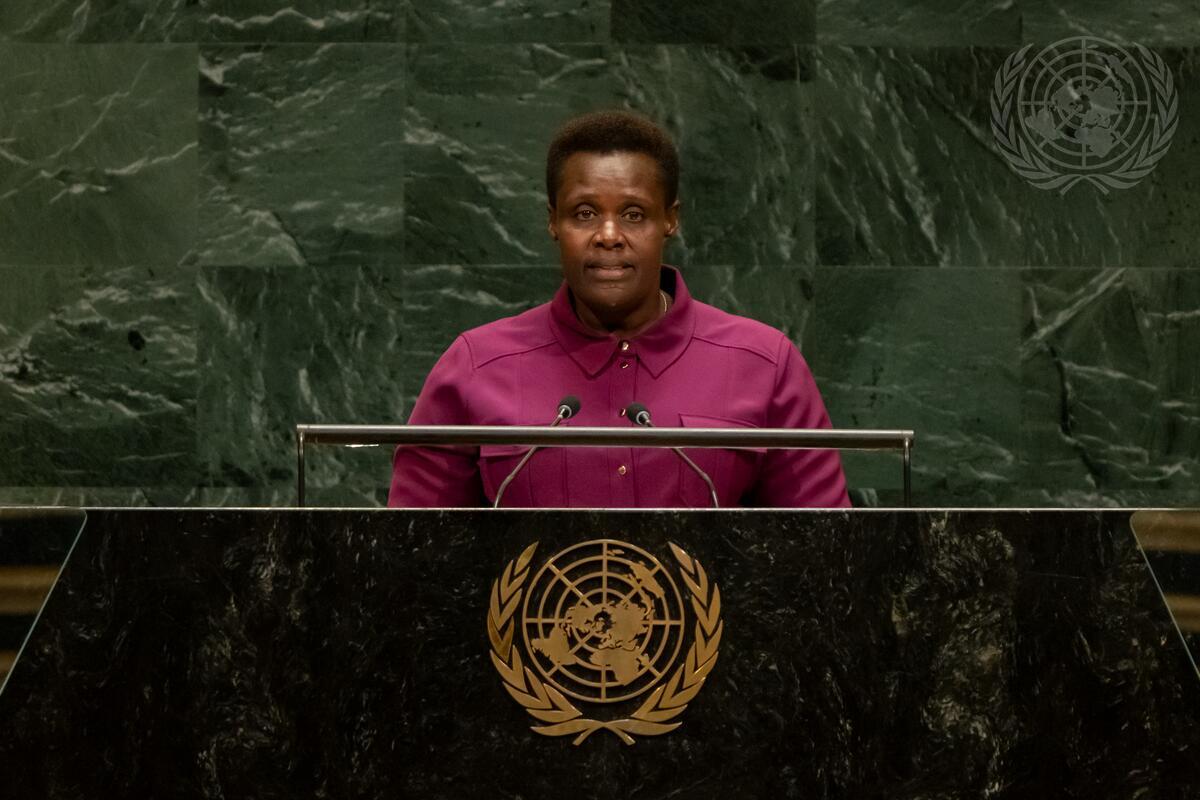
Uganda also used UNGA81 to reaffirm health investment as a national priority. In Uganda's General Debate statement delivered by Vice President Jessica Alupo on 23 September, the Government highlighted investments under the Fourth National Development Plan aimed at improving access to affordable and equitable health care, including modernising facilities and integrating digital health solutions to improve service delivery and accountability.
Uganda also called for action to address health-financing gaps and improve access to medicines, diagnostics and vaccines.
The challenge now is translating those ambitions into measurable results.
For civil-society organisations, this means continuing to ask practical accountability questions: Are adequate resources being allocated? Are essential reproductive, maternal and newborn health commodities available at the point of care? Are commitments reaching women, adolescents and communities? And can progress be tracked transparently?
From New York to the frontline
UNGA81 has reinforced an important lesson: progress will not ultimately be measured by the number of commitments announced in New York.
It will be measured in health facilities and communities—in whether a woman can access the medicines she needs during childbirth, whether a young person can obtain accurate information and appropriate reproductive-health services, and whether health workers have the commodities and systems needed to provide quality care.
For Samasha, the priority remains ensuring that evidence informs decisions, commitments are followed by resources, and resources translate into better health outcomes for women, children and adolescents.