
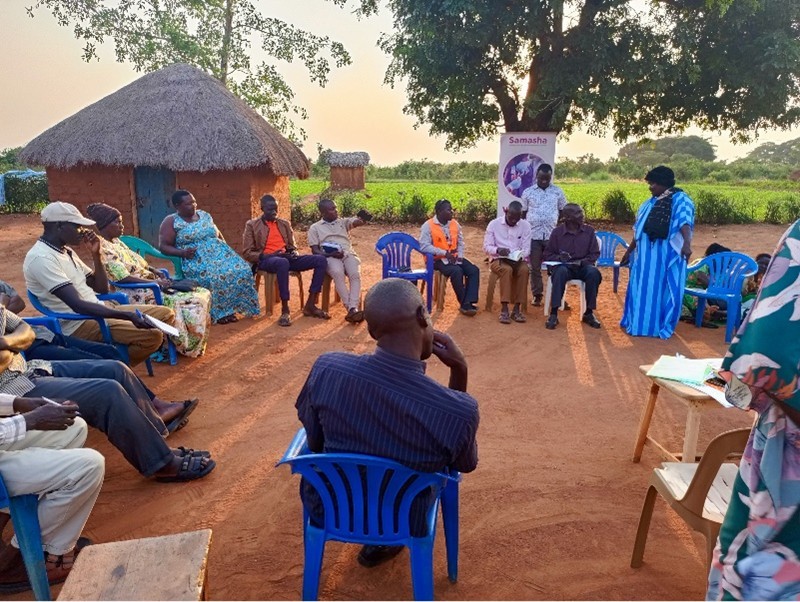
In many communities across Kyankwanzi District, Uganda, traditional gender norms place men as the ultimate decision-makers in child health, including immunization. This deeply rooted cultural dynamic has often limited mothers’ ability to access timely vaccination services for their children — contributing to low immunization rates and putting children at risk of preventable diseases.
Why Involve Men? Breaking Down Barriers to Child Health
In Kyankwanzi hotspots like Butemba, Watuba, Muwangi, and Ntunda, persistent mistrust, myths about vaccine safety, and widespread misconceptions have suppressed immunization uptake. Fathers and male leaders typically control household decisions related to health, leaving mothers dependent on their approval for routine vaccines.
Recognizing that sustainable change requires shared responsibility, Samasha adopted an intentional strategy to engage men as vital allies in protecting child health.
Identifying and Empowering Community Champions
In partnership with District Health Teams (DHTs) and Village Health Teams (VHTs), Samasha identified 25 respected and influential male community leaders — including cultural authorities, traditional leaders, and religious elders.
These individuals underwent targeted training covering:
- The critical benefits of immunization
- Risks from vaccine-preventable diseases
- How entrenched gender norms obstruct timely vaccination
By providing accurate knowledge and raising awareness about gender-related barriers, these leaders became powerful advocates for child immunization.
Shifting Attitudes, Dispelling Myths
Equipped with evidence-based data on Zero-Dose Children (those who haveeceived routine vaccines) and under-immunized kids in Kyankwanzi, the trained leaders spearheaded community dialogues designed to:
- Challenge male dominance over household health decisions
- Address deep mistrust of vaccines
- Counter influences from religious extremism
- Debunk common myths, such as false claims linking the HPV vaccine to fertility issues or hidden agendas
Transformative Impact on the Ground
The campaign’s results have been remarkable:
- Public Commitments: In hotspots like Butemba and Ntunda, men have made public pledges to support their partners in accessing timely immunization services.
- Legitimizing Immunization: Religious and cultural leaders now weave accurate vaccine messages into sermons, prayers, and community talks.
- Championing Zero-Dose Children: The 25 trained male leaders actively identify unvaccinated children, engage hesitant families, and mobilize fathers and extended families to protect every child’s health.
- Strengthened Networks: Collaboration between DHTs, VHTs, and community influencers now enables rapid follow-up, barrier resolution, and ongoing vaccine support.
Building a Culture of Shared Responsibility
Through Samasha’s innovative male-engagement strategy, long-standing gender barriers have been dismantled. Trust is being rebuilt, turning previous obstacles into opportunities for collective action.
This initiative powerfully illustrates that involving men as allies can:
- Reshape entrenched social norms
- Dispel harmful myths
- Critically, save children’s lives by improving immunization coverage
A Model for Gender-Responsive Health Programming
The success in Kyankwanzi offers an inspiring, replicable blueprint for other districts and countries aiming to accelerate progress toward healthier futures for all children.
By fostering genuine partnership and shared ownership, the initiative highlights that advancing child health is not just a mother’s responsibility — it calls for the active engagement of men as champions and change-makers.